

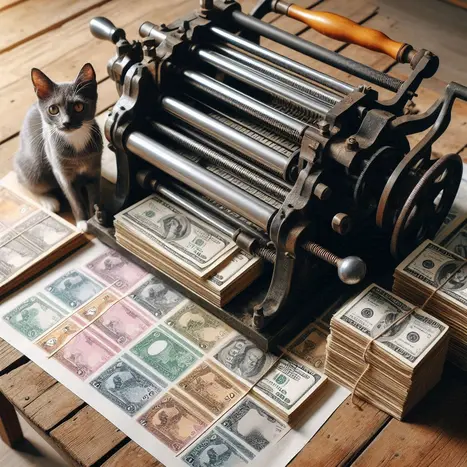
The Bank of England (BoE) created the money for its quantitative easing (QE) programme by digitally creating central bank reserves. This process is often called “printing money,” although no physical money is printed. Instead, the BoE electronically generates the funds to purchase Government and Corporate Bonds.

Quantitative easing, commonly known as QE, is a monetary policy strategy central banks employ to boost the economy when conventional monetary measures are no longer effective. Is QE Just Printing Money? Does it work? Read on....